The 24-hour flood test - and why your tiler should be insisting on it
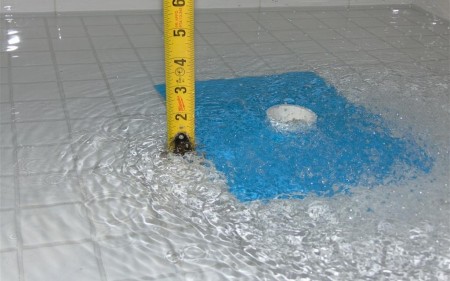
The flood test is one of those things in construction that costs almost nothing and prevents one of the most expensive defects you can have. It catches roughly 1 in 30 wet-area waterproofing jobs that have a defect the eye can't see — before the tiler closes them in forever.
What it actually involves
After the waterproofing membrane has cured (typically 24-72 hours after the final coat), the applicator:
- Plugs the floor waste with a temporary bung
- Fills the wet area with water to roughly the height of the hob (usually 25-50mm above the floor)
- Marks the water level with a pencil mark on the wall
- Waits 24 hours
- Returns the next day and checks: water level dropped? Damp patches on the ceiling below? Damp anywhere it shouldn't be?
If everything's dry and the water hasn't dropped (beyond normal evaporation), the membrane is sound. Drain the test water and the tiler can start.
If there's a leak: we find it, repair it, and re-test. The fix is straightforward because the membrane is still exposed and visible.
Why some builders skip it
Honest answer: the 24-hour wait. On a tight construction program, losing a day waiting for water to sit there is annoying. Some builders argue "the membrane is fine, I've been doing this for 20 years" — which is true on average, but the 1-in-30 case still happens.
Other arguments you'll hear:
- "We don't have time." If the schedule can't absorb one day for a test that prevents a $20,000 remediation, the schedule was wrong.
- "It's not in the spec." Australian Standards recommend flood testing for AS 3740 work. Most manufacturer warranties require it. Most state inspectors look for evidence of it.
- "It adds cost." The added cost is the day. The membrane and labour are already there. It's a $100-200 item on a $2000-4000 waterproofing job.
What you should ask for
If you're paying for a new bathroom, shower or wet area, ask three specific things:
- "Will the waterproofing be flood-tested before tiling?" If the answer is no, ask why not.
- "Can I have photographs of the flood test?" Date-stamped photos showing the area flooded and showing it the next morning are evidence the test happened.
- "Will I receive a compliance certificate?" In Queensland this is the Form 16. Other states have equivalents. This is the document that protects you if the floor leaks years later.
A contractor who pushes back on any of these is a contractor whose work you should be more nervous about, not less.
What about commercial work?
Commercial wet areas (offices, restaurants, healthcare) are routinely flood-tested as part of practical completion sign-off. The cost-of-failure is higher and the inspection regime is tighter. Residential should follow the same practice, even though the regulator scrutiny is lighter — the customer is the same person who'll be living with the consequences.